GHK-Cu vs Retinol: The Ultimate Guide for Your Skin
- 9 Mins to read
- Ingredient Comparisons, Skincare Science
If you’ve spent any time researching skincare actives, the GHK-Cu vs retinol debate has probably crossed your feed. They’re two of the most evidence-backed ingredients in modern skincare, and they come up together constantly — in forums, in TikTok routines, in ingredient deep-dives. But they work in very different ways, suit different skin types, and have very different tolerability profiles. This guide breaks both of them down clearly so you can make an informed decision for your own routine.
What is Retinol?
Retinol is a derivative of Vitamin A and one of the most extensively studied cosmetic ingredients in history. It belongs to a family of compounds called retinoids, which range in strength from over-the-counter retinol to prescription-strength tretinoin. When applied to the skin, retinol is converted by skin enzymes into retinoic acid — the active form that interacts with skin cell receptors to speed up cellular turnover.
The result: older, duller skin cells are shed more quickly, newer cells surface faster, and the skin’s collagen production is indirectly stimulated. This process is well-documented and effective, but it comes with a catch — the same accelerated turnover that drives retinol’s results also causes what’s commonly known as the “retinol purge”: a period of dryness, peeling, redness and increased sensitivity that can last weeks when you first start using it.
What is GHK-Cu?
GHK-Cu (Copper Tripeptide-1) is a naturally occurring tripeptide — a chain of three amino acids: glycine, histidine and lysine — that binds to copper ions. Unlike retinol, which is an exogenous vitamin derivative, GHK-Cu is something the human body produces itself. Its natural levels in plasma decline significantly from the mid-twenties onwards, which has made it an appealing subject of research for those looking to support the skin’s natural renewal capacity through topical application.
Rather than forcing the skin to turn over faster, GHK-Cu works by supporting the biological processes the skin uses to repair and maintain itself — particularly collagen and elastin synthesis, glycosaminoglycan production, and antioxidant activity. It’s a signalling approach rather than a chemical-forcing one.
GHK-Cu vs Retinol: How They Work Differently
To understand the GHK-Cu vs retinol comparison properly, you need to look at what each ingredient is actually doing at a cellular level.
| Factor | Retinol | GHK-Cu |
| Mechanism | Accelerates skin cell turnover via retinoic acid | Signals collagen/elastin synthesis, supports repair |
| Natural to body? | No — Vitamin A derivative | Yes — naturally produced peptide |
| Collagen effect | Collagen effect | Direct — supports production and quality |
| Initial reaction | Often dryness, peeling, purge period | Generally well tolerated from first use |
| Suited to sensitive skin? | Can be challenging — start low and slow | Yes — anti-inflammatory properties |
| Best time to apply | Evening only (photosensitising) | AM or PM |
| Evidence base | Decades of clinical research | 50+ years of research, growing body of studies |
What Retinol is Best For
Retinol genuinely excels at accelerating the skin’s renewal process. If your primary concern is visible sun damage, uneven skin texture, or hyperpigmentation — areas where faster cellular turnover makes a meaningful difference — retinol has an impressive track record. It’s also well-studied for fine line reduction, with results typically becoming visible at around 12 weeks of consistent use.
The trade-off is tolerability. Retinol is not for everyone, particularly those with reactive, rosacea-prone or very dry skin. The adaptation period can be frustrating, and many people abandon it before seeing results simply because the initial skin response is uncomfortable.
It’s also particularly well-suited to:
- Sensitive or reactive skin that can’t tolerate retinol’s initial irritation phase
- Skin barrier repair — GHK-Cu supports glycosaminoglycan production, which helps the barrier retain moisture
- Skin with persistent low-grade redness — its anti-inflammatory properties help calm the complexion
- Post-summer skin recovery — its antioxidant properties help address the effects of UV-induced free radical damage
- Those new to actives who want results without the adaptation challenge
Can You Use GHK-Cu and Retinol Together?
Yes — and for many people, the GHK-Cu vs retinol question doesn’t have to be either/or. They work through genuinely complementary mechanisms: retinol drives cell turnover while GHK-Cu supports the structural quality of the skin being renewed. Some skincare enthusiasts find that GHK-Cu helps counteract some of retinol’s drying and irritating effects, though this should be understood as anecdotal rather than clinically established.
The practical approach most skincare practitioners suggest:
- Alternate nights: GHK-Cu on Monday, Wednesday, Friday. Retinol on Tuesday, Thursday. Both on a recovery moisturiser-only night on Saturday. (This is the basis of skin cycling — see our guide.)
- Never the same step: Do not apply GHK-Cu and retinol in the same application. Layer them if needed, but with a moisturiser buffer in between, and ideally at different times.
- Start with GHK-Cu first if you’re new to actives. Build your skin’s tolerance and structural health before introducing retinol. Many people find the transition far smoother this way.
New to actives? A common approach is to start with GHK-Cu alone for 6–8 weeks, let the skin adapt and strengthen, then introduce retinol at a low concentration (0.025–0.05%) while continuing GHK-Cu on alternating evenings.
Which is Better for Anti-Ageing?
Honestly, the GHK-Cu vs retinol debate doesn’t have a single winner.” They address ageing through different mechanisms, and the best choice depends on your skin type, tolerance, and specific concerns.
- If your skin is resilient and you can tolerate the adaptation period, retinol delivers well-documented results for texture, pigmentation and fine lines.
- If your skin is sensitive, dry, or reactive, or if you want to support firmness and structural quality without the irritation risk, GHK-Cu is the more accessible starting point — and arguably a more targeted approach for collagen quality specifically.
- For most people in their 30s and 40s, using both thoughtfully is the most comprehensive approach to addressing multiple visible signs of ageing simultaneously.
Cost and Accessibility in the UK
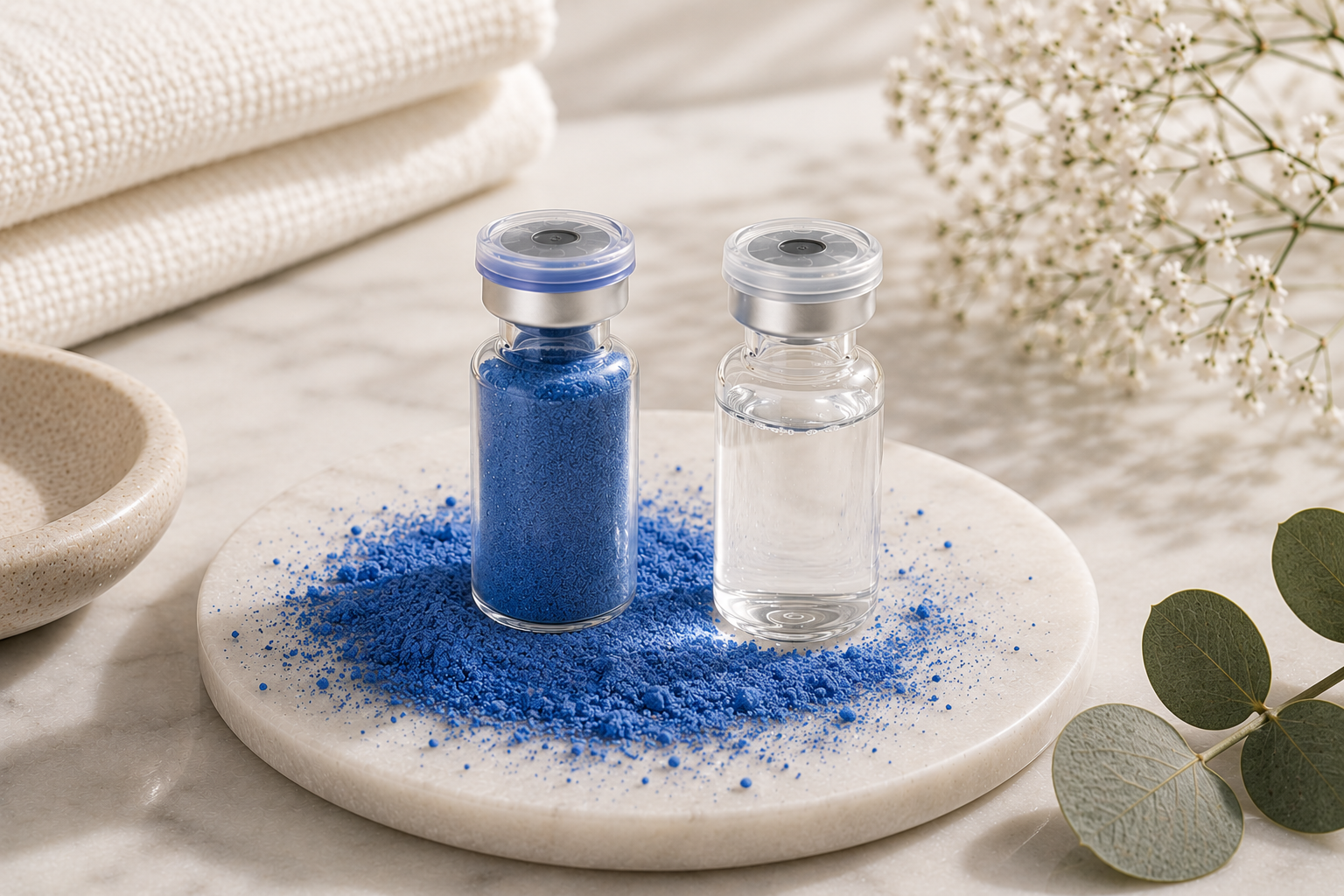
Retinol is widely available in the UK across all price points, from budget options at Boots to high-end formulations from brands like SkinCeuticals and Paula’s Choice. GHK-Cu has historically been harder to source in purity-verified form — which is precisely why specialist UK suppliers like ghkcu.uk exist. Our 100mg lyophilised copper peptide vial is independently HPLC-tested to 99%+ purity with a QR-verified Certificate of Analysis — giving you confidence about exactly what you’re applying.
Summary
Ultimately the GHK-Cu vs retinol decision comes down to your skin type, tolerance, and goals — and for many people, the answer is thoughtfully using both.
| Choose Retinol if… | Choose GHK-Cu if… | |
| Skin type | Resilient, oily or combination | Sensitive, dry, reactive or mature |
| Primary concern | Texture, pigmentation, fine lines | Firmness, elasticity, barrier health |
| Tolerance | Happy to work through an adaptation period | Want results without initial irritation |
| New to actives? | Start low and slow | Excellent starting point |
| Time of use | Evening only | AM or PM, flexible |
Shop GHK-Cu at ghkcu.uk
— UK lab-verified, 99%+ purity, QR-authenticated Certificate of Analysis with every order. Free UK delivery. → View our GHK-Cu copper peptide