What is GHK-Cu? The Complete Guide to Copper Peptide
- 9 Mins to read
- GHK-Cu Guide
GHK-Cu has quietly become one of the most talked-about ingredients in modern skincare, and for good reason. From anti-ageing serums to scalp treatments, copper peptide is appearing across the industry with growing momentum. But what exactly is it, where does it come from, and why does it matter for your skin? This guide covers everything you need to know.
What is GHK-Cu?
GHK-Cu stands for Glycyl-L-Histidyl-L-Lysine Copper, a small tripeptide (a chain of three amino acids: glycine, histidine and lysine) that naturally binds to copper ions. It was first identified in human blood plasma in the early 1970s by biochemist Dr Loren Pickart, who noticed that older liver tissue regenerated more effectively when exposed to plasma from younger donors. The active compound responsible turned out to be GHK-Cu.
Since that discovery, GHK-Cu has accumulated over five decades of scientific interest. It occurs naturally in human plasma, saliva and urine, and crucially, its levels in the body decline significantly with age. Studies suggest that plasma concentrations of GHK-Cu drop by around 60% between the ages of 20 and 60, a decline that many researchers believe correlates with the skin’s reduced capacity for repair and renewal as we get older.
What Does GHK-Cu Actually Do?
GHK-Cu acts as a biological signaling molecule. When it binds to copper ions, it creates a bioavailable form of copper that cells can use far more effectively than free copper alone. Copper is an essential co-factor for several key enzymes in the skin, most notably lysyl oxidase and lysyl hydroxylase, which play a central role in the cross-linking and stabilisation of collagen fibres. In simple terms: without adequate copper, newly produced collagen is structurally weaker.
What makes GHK-Cu particularly remarkable compared with many cosmetic peptides is the breadth of its influence. Research using gene expression analysis has shown that it appears to interact with thousands of genes involved in processes such as:
- Collagen and elastin synthesis — the structural proteins that give skin its firmness and bounce
- Glycosaminoglycan production — the molecules responsible for skin hydration and plumpness
- Antioxidant activity — helping to neutralise the free radicals that accelerate visible skin ageing
- Anti-inflammatory pathways — supporting a calmer, less reactive skin environment
- Skin barrier function — the protective outer layer that keeps moisture in and irritants out
Most cosmetic actives target one or two of these pathways. GHK-Cu’s influence across multiple biological processes simultaneously is what has made it such a compelling subject of study for cosmetic scientists and skincare enthusiasts alike.
Why Does GHK-Cu Turn Blue?
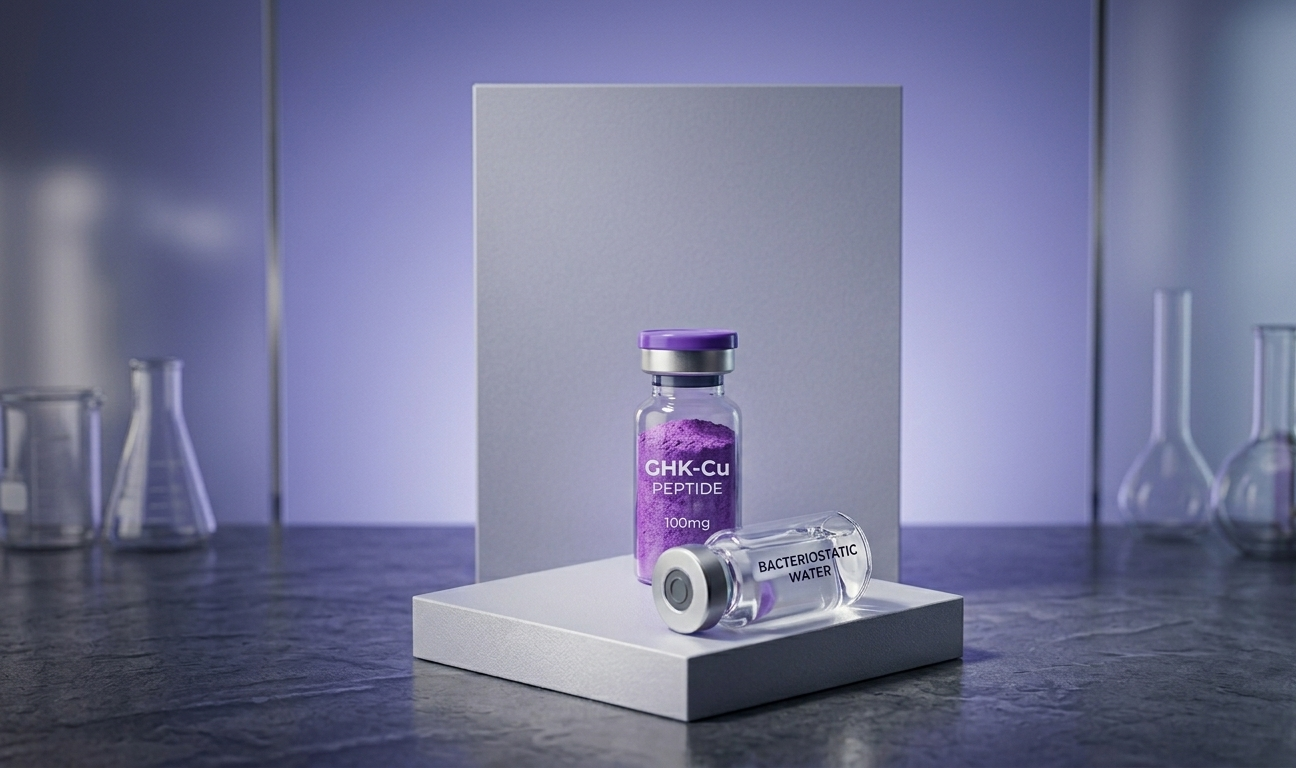
You may have noticed that GHK-Cu powder has a distinctive blue colour — sometimes a deep blue, sometimes lighter depending on the batch. This is not a sign of impurity or a quality issue. The blue colour is a direct result of the copper ion being chelated (bound) within the peptide structure. Free copper salts are typically blue or green, and when the tripeptide forms its bond with copper, it retains that characteristic hue. The shade can vary between batches due to slight differences in synthesis conditions and environmental factors, but the purity and structural integrity of the compound are unaffected.
How Does it Compare to Other Peptides?
The skincare market is full of peptide ingredients — Matrixyl, Argireline, Leuphasyl and many more. Most of these work by targeting a single specific mechanism, such as inhibiting muscle contractions or stimulating a particular protein. GHK-Cu is different in that it functions more as a broad biological messenger, influencing multiple repair and renewal pathways at once. Several comparative studies have shown it outperforming some well-established cosmetic peptides for metrics such as wrinkle volume reduction and improvements in skin firmness over equivalent time periods.
Is GHK-Cu Safe for Topical Use?
GHK-Cu has an excellent safety profile for topical cosmetic use. Because it is a peptide that occurs naturally in the human body, it is generally well-tolerated at the concentrations used in skincare applications. The most commonly reported reactions are mild and localised — occasional skin redness or sensitivity in people with reactive skin — which typically resolve on stopping use.
Patch test recommended: As with any new skincare ingredient, we always recommend applying a small amount to the inner arm and waiting 24 hours before full facial use. This is good practice for any active ingredient, regardless of its tolerability profile.
One important compatibility note: GHK-Cu does not perform well alongside strong acids such as vitamin C (L-ascorbic acid) or AHAs, as these can destabilise the copper-peptide bond and reduce effectiveness. It’s best applied in a separate routine step, or at a different time of day to any acidic actives.
What Form Does GHK-Cu Come In?
GHK-Cu is available in two primary forms for topical cosmetic use:
- Lyophilised powder — freeze-dried powder that you reconstitute with a mixing solution before applying. This form offers superior stability and a longer shelf life, and it allows you to confirm purity via lab testing more easily. This is the form we supply at ghkcu.uk.
- Pre-formulated serums — ready-to-apply liquids where GHK-Cu has already been combined with a carrier base. Convenient, but you have less visibility over exact concentration and ingredient quality.
The powder format requires a simple mixing step before use, but gives you full confidence in what you’re applying — you can verify the purity of the powder directly via a Certificate of Analysis before you ever mix it.
What Should I Look For When Buying GHK-Cu in the UK?
Quality varies considerably between suppliers. When choosing a GHK-Cu product, the key things to look for are:
- Independent HPLC testing — High-Performance Liquid Chromatography is the gold-standard method for verifying peptide purity. Any reputable supplier should be able to provide this.
- Batch-specific Certificate of Analysis (COA) — A generic COA is not the same as a batch-specific one. Look for suppliers who can show you results for the exact batch you receive
- UK-based quality control — Shorter supply chains mean less risk of degradation during storage and transit.
- Transparent ingredient listing — You should know exactly what is in the vial, including any diluent or carrier ingredients.
At ghkcu.uk, every batch of GHK-Cu is independently tested by a UK laboratory and assigned a unique QR code, so you can pull up your exact Certificate of Analysis the moment your order arrives.
How Long Has GHK-Cu Been Used in Skincare?
Despite feeling like a recent trend, GHK-Cu has a surprisingly long research history. Dr Pickart’s initial discovery was in the 1970s, and interest has been building steadily ever since. The first commercial copper peptide skincare products appeared in the 1990s, and the ingredient has featured in peer-reviewed cosmetic science publications for decades. What’s changed in recent years is the accessibility of high-purity copper peptide to individual consumers, thanks to suppliers making cosmetic-grade powder directly available — rather than only as a pre-mixed component in expensive branded formulations.
Summary: Key Facts About GHK-Cu
| Questions | Answers |
|---|---|
| What is it? | A naturally occurring copper-binding tripeptide |
| Where is it found naturally? | Human plasma, saliva and urine |
| What is it used for? | Topical cosmetic skincare applications |
| Why is it blue? | The copper-peptide bond gives it a characteristic blue-green colour |
| Is it safe for topical use? | Yes — well tolerated, patch test recommended |
| What to avoid combining it with? | Strong acids (vitamin C, AHAs) in the same application |
| How do I verify quality? | Independent HPLC testing and a batch-specific COA |
Ready to try GHK-Cu?
Our UK-sourced, independently lab-tested copper peptide powder is available now with free delivery and a QR-verified Certificate of Analysis included with every order. → Shop GHK-Cu at ghkcu.uk